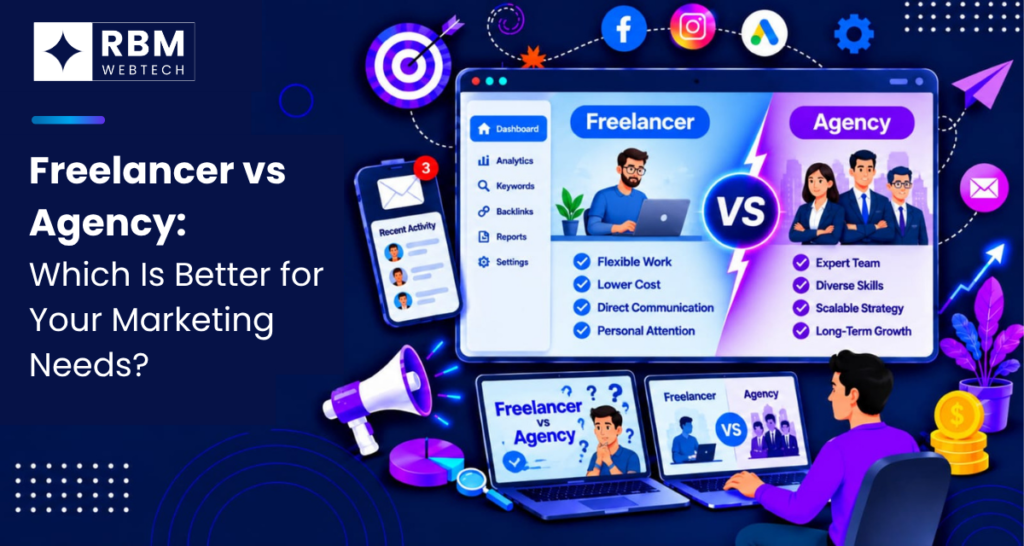
At some point, almost every business runs into the exact same wall. You realize you can’t keep doing all the marketing yourself, but you aren’t quite ready to build a massive in-house team either. That brings you straight to the classic fork in the road: Freelancer vs. Agency: Which is better for your marketing needs?
It isn’t a trick question, but there isn’t a one-size-fits-all answer either. Pick a freelancer, and you get direct access to a single expert who moves fast and costs less. Go with an agency, and you get a full room of people taking care of everything under one roof. Both ways work—it really just comes down to what your business needs right now, how much you’re willing to spend, and how hands-on you want to be.
What Is a Freelancer?
A freelancer is basically an independent professional running their own one-person show. When you hire one, there’s no middle management or account team sitting between you and the person doing the work. You work directly with the specialist.
Most freelancers focus on doing one or two things really well, such as:
- Writing web copy or blog articles
- Fixing technical website SEO issues
- Setting up and running Google or Meta ads
- Designing pages and brand assets
Because freelancers don’t have to pay for office leases or support staff, they can keep their rates reasonable. You pay for their specific time and skills, nothing extra.
What Is a Marketing Agency?
An agency is a full team of professionals operating under a single brand. Instead of hiring one person to tackle your project, you’re tapping into a structured setup that handles everything from initial planning to day-to-day execution and weekly reporting. For example, partnering with an established firm like RBM WebTech gives you access to specialized divisions tailored for multi-channel growth.
When you sign with an agency, your account usually gets support from:
- Account Managers: The main people you talk to for updates and calls.
- Strategists: The folks who figure out the main campaign angle and strategy.
- Specialists: The actual designers, writers, media buyers, and coders making things happen.
- Analysts: The team looking at the numbers to see what’s working.
Agencies generally work on monthly retainers, making them ideal if you want to run big, ongoing campaigns without managing every detail yourself.
Key Differences: Freelancer vs. Agency
| Factor | Freelancer | Marketing Agency |
| Pricing | Flexible, lower costs with no overhead built-in. | Higher monthly retainers to cover a whole team. |
| Focus | Deep skill in one specific area. | Broad coverage across many channels. |
| Communication | Direct text, chat, or call with the creator. | Filtered through an account manager. |
| Turnaround | Quick on small tasks; limited on big projects. | Parallel work split across multiple people. |
| Backup Plan | If they fall sick, work temporarily stops. | Other team members step in if someone is off. |
| Tools | They use basic stacks or rely on your tools. | Access to enterprise-grade software platforms. |
Pros and Cons of Hiring a Freelancer
The Pros
- Better On the Wallet
Freelancers don’t have corporate overhead to cover. You aren’t paying for their software suites, manager salaries, or office space. Every dollar goes straight into the actual work being done. - Direct, Fast Communication
There is zero bureaucracy. If you want to change an ad angle or fix a typo, you drop them a message and it gets done. You don’t have to schedule a formal call through a project coordinator. - Real Specialized Expertise
A lot of senior freelancers left top agencies precisely so they could focus purely on their trade. That means you often get top-shelf experience focused entirely on your project. - Agile and Adaptable
Need to pivot your campaign approach by tomorrow morning? A freelancer can usually turn things around quickly without waiting for internal team sign-offs.
The Cons
- Limited Hands on Deck
There’s only so much one person can do in a day. If you need a whole website built, copy written, ad funnels built, and graphics designed all at once, a freelancer will quickly run out of hours. - No Built-in Safety Net
If your freelancer takes a vacation, gets sick, or suddenly gets booked out, your marketing stalls. You are dependent on a single individual. - You Have to Manage Them
A freelancer isn’t going to set your company’s broad corporate strategy. You have to write the briefs, set the direction, and keep track of project timelines yourself.
Pros and Cons of Hiring a Marketing Agency
The Pros
- Everything Handled in One Place
Agencies thrive when things get complex. If you want search ads, social content, email sequences, and site tweaks all moving in sync, an agency coordinates all those moving parts smoothly. Integrating dedicated SEO Services alongside targeted paid campaigns ensures organic reach builds while immediate leads come in. - Reliable Output
If your regular campaign manager takes a week off, the agency simply passes the work to someone else on the floor. Your campaigns keep running without a hitch. - Big-Picture Strategy
Agencies don’t just execute tasks; they map out full growth paths. They pull historical data, analyze competitor strategies, and build full-funnel systems designed to grow your business. - Access to Top-Tier Software
Marketing tools get expensive fast. Agencies spend thousands every month on high-end SEO, analytics, and research platforms—and your brand benefits from those insights without paying out-of-pocket for software subscriptions.
The Cons
- Higher Cost
Agencies require serious investment. Between staff salaries and administrative overhead, their monthly retainers are significantly higher, and many ask for multi-month agreements upfront. - Layered Communication
You won’t always talk directly to the person working on your graphics or writing your copy. Everything usually goes through an Account Manager, which can slow down quick edits. - Junior Execution
While the agency founders might pitch you during the sales process, day-to-day execution is frequently assigned to mid-level or junior team members working under senior supervision.
How to Decide: Which Is Right for You?
The best choice depends on what your business needs right now and how much bandwidth you have to oversee the work.
Go with a Freelancer if:
- You have a clear, isolated task (like writing blog posts, auditing site SEO, or refreshing landing page copy).
- You already have an internal manager who can set direction and keep projects moving.
- You want to keep initial marketing expenses lean.
- You need quick turnaround times without contract negotiations.
Go with an Agency if:
- You want to run a complete, multi-channel marketing system at scale.
- You don’t have internal marketing leadership and need experienced strategists to build your roadmap.
- You cannot afford work interruptions caused by single-person bottlenecks.
- You have a steady budget allocated for long-term growth.
FAQs
1. Is hiring a freelancer always cheaper than hiring an agency?
On a raw line-item basis, yes. Freelancers generally cost noticeably less than agencies for individual tasks. However, if you have to hire four different freelancers and spend 15 hours a week managing them yourself, the hidden operational costs can add up quickly.
2. Can I use both freelancers and an agency at the same time?
A lot of growing companies run a hybrid model. They might hire a full-service partner for core structural tasks like Website Development and paid ads, while keeping trusted freelancers on deck for specific design work or long-form blog content.
3. How do I prevent getting locked into bad agency contracts?
Always read the fine print before signing anything. Try to negotiate a 90-day trial period or a rolling month-to-month agreement with a 30-day notice period. Most importantly, make sure the agreement clearly states that you own all ad accounts, domain assets, and data if you part ways.
4. What is the biggest risk when hiring a freelancer?
The biggest risk is single-person bottlenecking. If they hit personal delays, fall ill, or take on too many clients, your timeline slows down. You can manage this by keeping clear documentation, setting firm milestones, and keeping full control of all your platform logins.